By Jeramy Hope
As a person with a disability, a father, and an advocate, I have experienced this firsthand. Some days, simply showing up feels like an act of defiance. At times, just staying on course takes all the strength I have left. However, I also understand that remaining silent, giving up or turning a blind eye is not an option.
Self-advocacy is how we claim our space. It shapes a better future, not just for ourselves, but for everyone who comes after us.
Hope Isn’t Optional: It’s Strategic
We are currently in a situation where it feels like we’re fighting for every cent of funding we receive. With the constant reviews, administrative burdens, and complicated processes, many families and children with disabilities are finding it difficult to navigate the NDIS. As a result, countless individuals are exiting this daunting process, facing decisions that seem disconnected from real human impact. In this context, maintaining hope can feel naïve.
Please stay strong and don’t give up or lose hope, especially in the final moments.
But I would argue the opposite
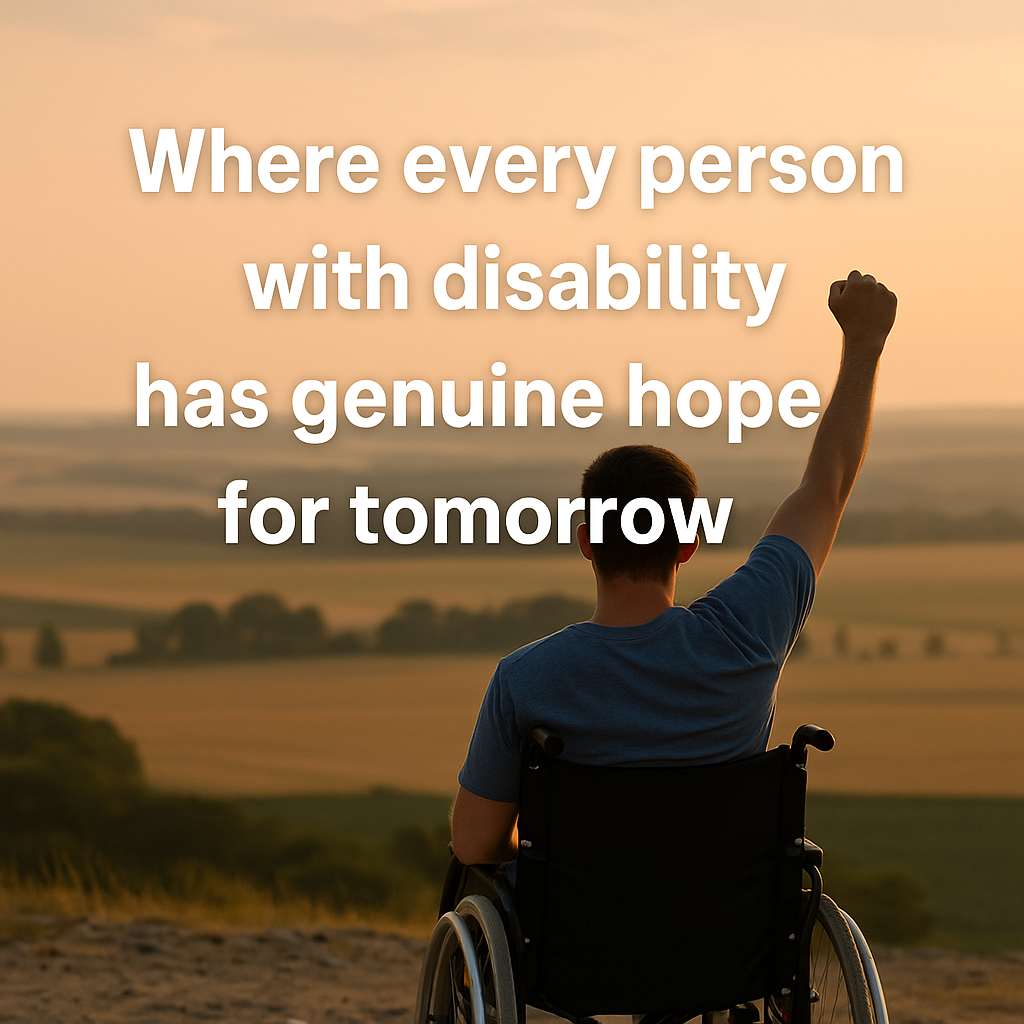
Hope is a strategic force. It fuels perseverance and enables us to envision the world we aspire to create: a system rooted in human rights, dignity, and potential.
I don’t say this lightly: I live in a body that often betrays me, in a world that isn’t built for me. Navigating to the shops can be dangerous and inaccessible, often resulting in falls. My home, which should be a sanctuary and safe place, is far from it because of my disability.
I’m raising a daughter who watches me closely.
She observes how I move through pain, manage exhaustion, respond to injustices, and advocate even when I don’t have all the answers. She sees how her 20-year-old body is failing her, displaying similar traits and symptoms to mine, albeit with a different diagnosis.
Despite witnessing the flaws in a system designed either for providers or to keep people out, I choose hope. This choice isn’t naïve; I’ve experienced these cracks firsthand. I’ve fallen through them but also found the strength to rise back up. Time and time again.

Blame Doesn’t Build, but Vision Does
It’s common to concentrate on what’s wrong, and there certainly is a lot that is. However, blaming the “crooks” the “government” or dwelling in distrust won’t help us rebuild a fair and equitable NDIS. While anger can be justified, it alone does not lead to meaningful change.
We must turn that frustration into fuel
Self-advocacy asks us to transition from critique to vision. It calls for our contribution and demands stamina, imagination, and community. We cannot achieve this alone, nor should we have to.
We need each other. It’s essential to come together in spaces filled with solidarity, encouragement, and purpose. We should lift one another up when someone stumbles. Although the system may feel confusing, our collective voice serves as a guiding compass.
Together, We Rebuild!
I have worked in this sector for decades. I have sat in boardrooms and community halls. I have been on both sides of the system, accessing services and advocating for their reform. And if there’s one truth I’ve learned, it’s this:
We cannot see meaningful long-term change without putting people at the center. At times this seems impossible; it feels like we have a natural barrier, but our collective stories have weight, including stories of trial and stories of triumph.
True reform arises when people with disabilities raise their voices, share their truths, and design the systems they utilise. It stems from parents and informal supports refusing to be overlooked. It comes from professionals who prioritise integrity over convenience.
It comes from unity, not division.
We are often encouraged to compete: one group against another, one type of disability against another, one policy priority over another. However, that scarcity mindset does not belong to us.
Working together, we have the opportunity for greater impact. Together, we share our collective thoughts, support, and understanding of one another.
Advocacy is a Marathon.
If you’re tired, I see you.
If you’re discouraged, I get it.
If you’re unsure how to keep going, I’ve been there too.
There are times when the paperwork, phone calls, decisions, rejections, and appeals feel overwhelming. Times when the fight seems futile. But if there’s one thing I want you to hear: it’s this:
Your voice matters. Your story counts. And your presence in this movement is powerful.
We don’t need to have it all figured out. We just need to take the next step. And then the next one. Bit by bit. Together.
A Call to Possibility
What would it look like if we built a system not out of fear, compliance, or cost-efficiency, but from a foundation of human rights and community?
- What if every participant felt heard, not just assessed?
- What if our housing, support, and services were designed by the people who actually use them?
- What if policy-makers sat with people who live the impact of their decisions?
- What if inclusion wasn’t a program or initiative, but a cultural norm?
These are not unreachable dreams. They are the logical outcomes of a system that listens, learns, and evolves, with people at its heart.
- And it starts with us
Final Thoughts: Keep Going
To every person with a disability navigating this system with courage: keep going.
To every parent fighting for their child’s support: keep going.
To every advocate, professional, or ally trying to hold space for truth and progress: keep going.
You might not see the results of your advocacy immediately. Still, your persistence contributes to a greater cause. Every conversation, every letter, and every moment you speak up matters.

We are not asking for special treatment; we are demanding equity. We want to be seen, heard, included, and valued.
We are striving for a world where we don’t have to fight so hard, where our energy can be focused on thriving, not merely surviving.
And that world is possible.
It’s not easy and there are no shortcuts. We will face moments of pain and rejection along the way.
However, this is a crucial opportunity for advocacy and reform, and it begins with trust among us. We cannot reshape and rebuild a broken system for future generations if we cannot work together. Let’s find the strength and determination to collaborate so that we can build a better future together.
One response to “The Power of Self-Advocacy: Choosing Hope in a Broken System”
[…] I documented the experience of navigating disability, repeatedly proving my needs to systems, and turning personal experience into sustained advocacy. That journey—from experience, through reflection and learning, towards developed expertise—is […]